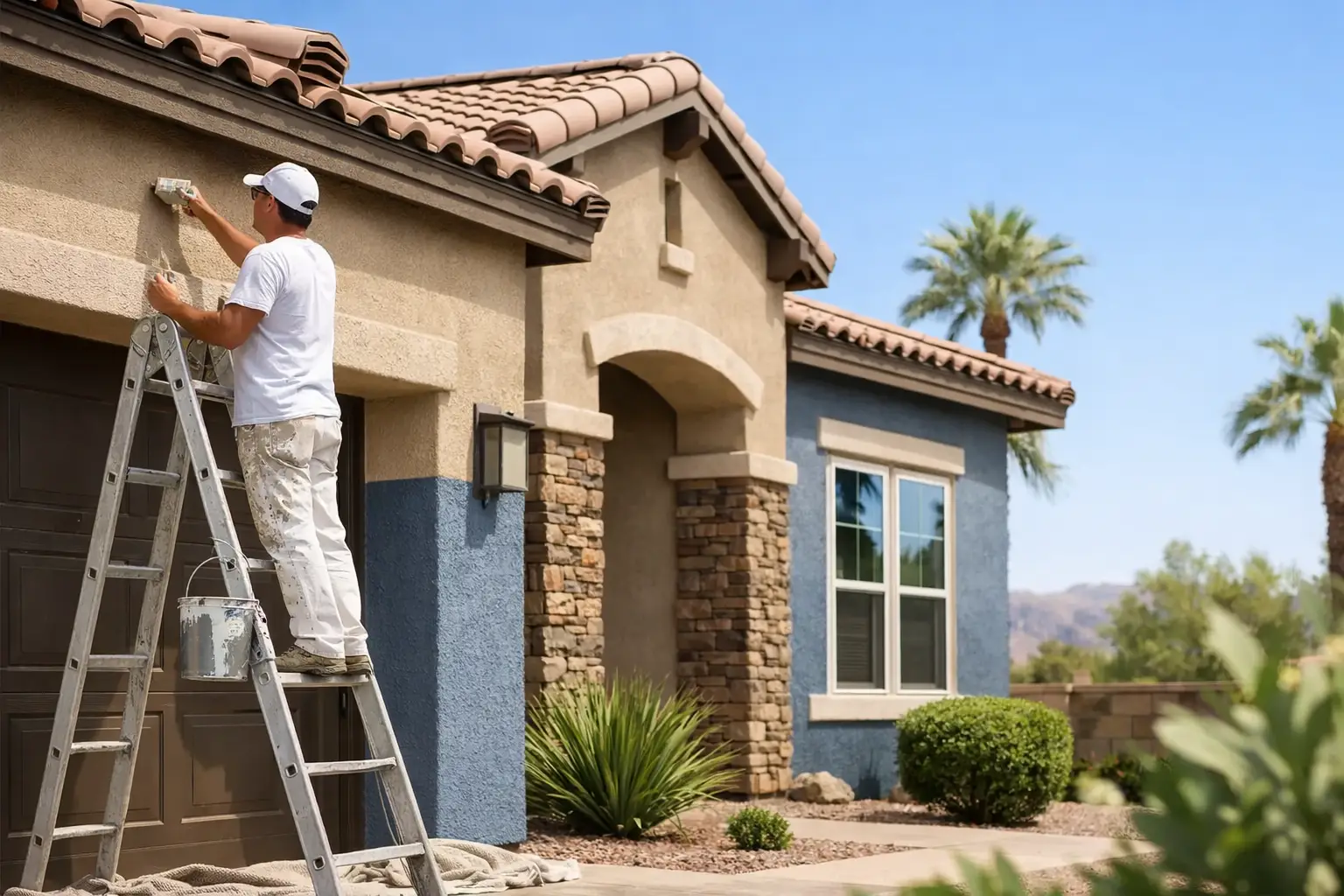
A house in Mesa can look fine from the street and still be losing ground to the climate. South-facing walls fade faster, stucco collects dust, trim takes a beating from heat, and small cracks can let bigger problems start. That is why exterior house painting Mesa homeowners invest in is not just about color. It is about protection, preparation, and making sure the finish holds up in Arizona conditions.
A good exterior paint job should do two things at the same time. It should improve curb appeal right away, and it should help defend the home from sun exposure, temperature swings, and normal wear. If either part gets ignored, the job may look good for a short time but fail sooner than it should.
Why exterior house painting in Mesa is different
Painting a home in Arizona is not the same as painting in a mild climate. Mesa homes deal with intense UV exposure, long dry stretches, monsoon dust, and heat that can punish lower-grade materials. Those conditions affect how surfaces are cleaned, how repairs are handled, and when paint should be applied.
Stucco homes are a good example. They are common in Mesa, and they can perform well, but they also show hairline cracks, chalking, and fading over time. Wood trim has its own issues, especially if older paint is peeling or moisture has gotten into vulnerable areas. Even newer homes can have spots where builder-grade coatings start wearing down earlier than expected.
This is where proper prep separates a lasting job from a quick cosmetic one. In harsh sun, paint is only as strong as the surface underneath it. If dirt, loose material, chalky residue, or damaged sections stay in place, fresh paint may not bond the way it should.
What makes a paint job last
Homeowners often compare paint brands or color options first, which makes sense, but durability starts earlier than that. The work before the first coat matters just as much as the finish itself.
Surface cleaning comes first. Exterior walls pick up dust, oxidation, cobwebs, and residue that can interfere with adhesion. A home needs to be cleaned thoroughly enough to create a sound surface without causing unnecessary damage. After that, problem areas need attention. That may include scraping loose paint, sanding rough transitions, caulking gaps, patching cracks, or replacing damaged siding or trim.
Priming is another step that should not be treated like an extra. In some cases, existing surfaces are in good enough condition that spot priming is appropriate. In others, repairs, bare areas, or difficult surfaces call for more extensive priming. It depends on the condition of the home, the coating that is already there, and the product being applied next.
Then comes application. Coverage matters, but so does consistency. A clean, even finish around fascia, trim lines, stucco texture, and entry details takes time and attention. Rushing this part can leave lap marks, missed areas, or uneven sheen, especially on homes with strong sunlight hitting one elevation more than another.
Choosing colors for Mesa homes
Color is personal, but climate and neighborhood context matter too. Many Mesa homeowners want an updated look without choosing something that feels out of place or becomes hard to maintain.
Lighter body colors remain popular for a reason. They tend to reflect more heat and often hold their appearance better in direct sun than very dark shades. Earth tones, warm whites, soft grays, and desert-friendly neutrals usually fit well with local architecture and landscape. That does not mean darker accents are off the table. Front doors, shutters, trim, and garage details can add contrast without putting the entire exterior under the stress of a deep body color.
There is also the HOA factor. In many neighborhoods, approved palettes and rules shape what is possible. That can be frustrating if you want a dramatic change, but it also helps protect resale appeal and neighborhood consistency. A practical approach is to choose a color scheme that looks fresh now and still feels appropriate years from now.
Signs it is time to repaint
Some homes clearly need new paint. Others send quieter signals. Fading is one of the most common. If the color has lost its depth or some elevations look noticeably more washed out than others, the protective coating may be wearing thin.
Peeling, bubbling, cracking, and chalky residue are stronger warning signs. So are gaps in caulking around trim, exposed wood, or stucco cracks that keep reopening. These are not just appearance issues. They can allow water intrusion during storms and lead to more expensive repairs later.
A repaint can also make sense before visible failure gets severe. If you are planning to sell, trying to improve curb appeal, or simply want to avoid a bigger restoration project later, painting at the right time is often the more cost-effective move.
What homeowners should expect from the process
A professional exterior project should feel organized from the beginning. That starts with a clear estimate that explains what is being painted, what prep work is included, and whether repairs are part of the scope. Vague pricing usually leads to misunderstandings later.
Scheduling should also be realistic. Exterior work depends on weather, crew availability, and the condition of the home once work begins. A reliable contractor will give you a straightforward timeline and communicate if something changes.
During the job, protection and cleanliness matter. Landscaping, windows, walkways, and nearby surfaces should be treated with care. Prep debris should not be left scattered around the property, and the final cleanup should leave the home looking finished, not half wrapped up.
That level of care is a big reason homeowners choose a smaller, quality-focused contractor over a volume-driven company. When the crew is accountable for the details, the project tends to run smoother and the finish usually reflects it.
Exterior house painting Mesa property owners should ask about
If you are comparing estimates, ask more than just price. Find out how the surface will be cleaned, what repairs are included, where caulking will be applied, and whether damaged materials need replacement before painting starts. Ask what products are being used and why they are a good fit for stucco, siding, trim, or masonry.
It also helps to ask who will be overseeing the work day to day. That answer tells you a lot about quality control. A paint job can look similar on the first day it is finished. The difference often shows up later, after a summer of heat and exposure.
Mesa homeowners also benefit from asking about finish recommendations. Flat, satin, and low-luster finishes each have trade-offs depending on the surface and the look you want. A good contractor will explain those choices in plain terms instead of pushing a one-size-fits-all answer.
The value of getting it done right the first time
Exterior painting is one of the most visible improvements you can make to a property, but it is also one of the easiest to get wrong when prep is rushed. A lower bid may leave out cleaning, repairs, quality materials, or enough labor to apply the coating properly. That can save money up front and cost more later.
For homeowners who plan to stay in their house, that means less protection and more maintenance sooner than expected. For those thinking about resale, it can mean an exterior that photographs well for a listing but does not hold up through inspection or buyer scrutiny.
That is why workmanship matters. A careful, well-prepared project delivers more than a color change. It gives the home a cleaner appearance, stronger protection, and a finish you can trust through the seasons. Companies like 1UP Painting LLC build their reputation on that kind of steady, hands-on work rather than rushing from one job to the next.
If your exterior is faded, worn, or simply ready for an update, the best next step is not guessing how much life is left in it. It is getting a clear assessment from a contractor who understands what Arizona homes need and is willing to do the prep work that makes the final result worth it.