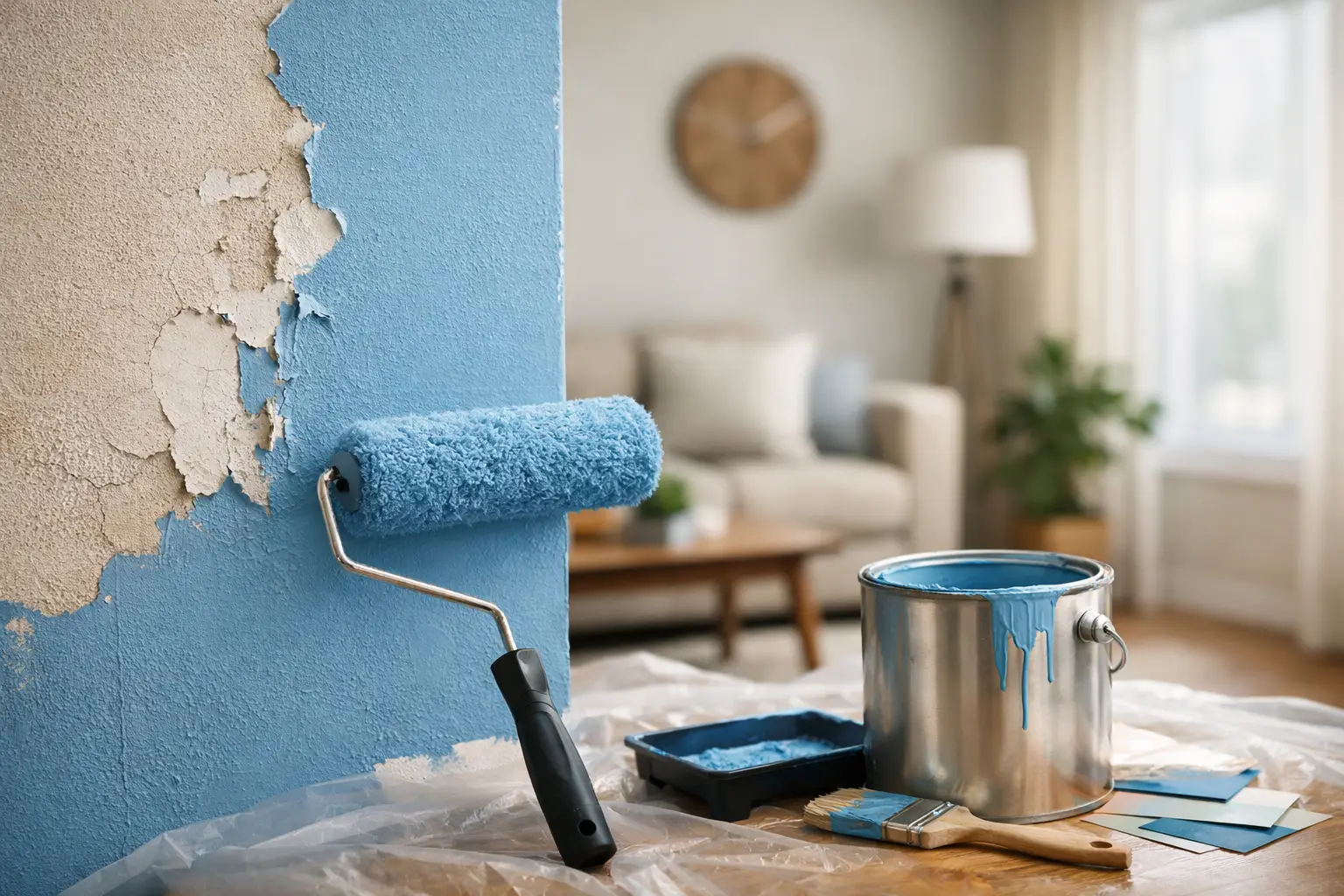
A wall can look fine for years, then suddenly every scuff, patch, and faded spot starts showing up at once. That is usually when homeowners start asking the same practical question: how long does interior paint last? The honest answer is that interior paint can last anywhere from a few years to well over a decade, depending on the room, the surface, the paint itself, and how well the job was prepared in the first place.
If you are trying to decide whether your walls need a refresh now or can wait another year or two, it helps to know what actually shortens paint life. Paint does not fail on a fixed schedule. It wears down based on traffic, moisture, sunlight, cleaning, and the quality of the original workmanship.
How long does interior paint last in most homes?
In a typical home, interior paint on low-traffic walls often lasts 5 to 10 years before it starts looking tired. Some spaces hold up even longer, especially adult bedrooms, formal dining rooms, and ceilings. High-use areas usually need attention sooner. Hallways, kids’ rooms, kitchens, bathrooms, and trim take more abuse and tend to show wear faster.
That wide range matters. A wall may still have paint on it after 10 years, but that does not always mean it still looks clean, even, and fresh. For most homeowners, repainting is about appearance as much as protection.
As a general rule, bedrooms and living areas may go 5 to 8 years or more, while bathrooms, kitchens, and busy hallways may need repainting closer to the 3 to 5 year mark. Trim, doors, and baseboards can need touch-up or full repainting sooner because they get bumped, cleaned, and handled more often.
What affects how long interior paint lasts?
The biggest factor is not just the brand of paint. It is the full system behind the finish. Surface prep, patching, sanding, caulking, primer use, product selection, and application all play a role in how long the final result holds up.
Surface preparation matters more than most people think
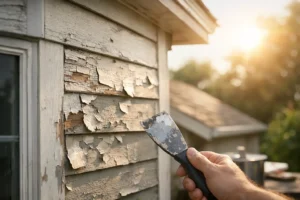
Paint sticks best to a clean, sound surface. If walls were painted over dust, grease, damaged drywall, old flaking paint, or glossy surfaces without proper prep, the finish can fail much earlier. Peeling, bubbling, uneven sheen, and visible patch marks are often signs that the underlying prep was rushed.
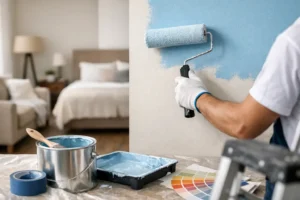
Good prep is what gives paint a chance to last. That means cleaning where needed, repairing dents and cracks, sanding rough spots, priming stains or repairs, and creating a uniform surface before the finish coats go on.
Room conditions change paint life
A climate-controlled guest room and a busy family bathroom do not age the same way. Moisture, steam, cooking residue, and repeated cleaning wear paint down over time. Bathrooms often develop mildew issues or sheen changes. Kitchens collect grease and smoke residue. Hallways and stairwells get constant contact from hands, bags, shoes, and furniture.
In Arizona homes, intense sunlight through windows can also fade certain colors over time. Even though interior paint is not facing the same weather exposure as exterior paint, UV light can still dull color in bright rooms.
Paint quality and finish make a difference
Higher-quality paint usually offers better coverage, stronger adhesion, improved washability, and more consistent color retention. It is not just about paying more. It is about getting a coating that holds up to real use.
Finish matters too. Flat paint can look great in low-traffic areas because it hides imperfections, but it marks up more easily and is harder to scrub. Eggshell and satin finishes tend to hold up better on walls that need occasional cleaning. Semi-gloss and gloss are more durable for trim, doors, and cabinets, though they show surface flaws more clearly.
Daily wear adds up
Some paint jobs fail because of one major problem. More often, they simply wear out little by little. Repeated wiping, fingerprints, pet contact, chair rub, moving furniture, and everyday cleaning can slowly dull the finish and break down the paint film.
This is why a home can have one room that still looks freshly painted and another that feels overdue, even if both were painted at the same time.
Signs your interior paint is no longer holding up well
Time alone should not be the only reason to repaint. The better question is whether the paint is still doing its job and still looks the way you want it to look.
A few signs are easy to spot. Scuffs that no longer clean off, fading near windows, hairline cracking, peeling, bubbling, stained areas, and uneven touch-up marks all suggest the finish is at the end of its useful life. Sometimes the issue is less dramatic. Walls may simply start looking dull, blotchy, or worn compared to the rest of the home.
Odors can also be a clue in certain spaces. In kitchens, bathrooms, or rooms with previous smoke exposure, old paint can hold onto smells longer than homeowners expect. A repaint with the right prep and products can help freshen the space in a noticeable way.
How long does interior paint last on different surfaces?
Walls get most of the attention, but not every interior surface ages the same way.
Drywall walls usually have the longest life when they are in stable, low-traffic rooms. Ceilings can often last 10 years or longer unless there is water damage, smoke exposure, or noticeable yellowing. Trim and baseboards often need repainting much sooner because they take direct impact. Interior doors also wear faster around handles, edges, and lower panels.
Cabinets are in a category of their own. They deal with oils, hand contact, cleaning products, and constant use. Even a good cabinet coating system can show wear sooner than a wall if the prep or product choice was not right.
Can interior paint last longer with proper maintenance?
Yes, but maintenance helps most when the original paint job was done correctly. You can extend the life of interior paint by cleaning gently, addressing stains early, using the right cleaners for the finish, and keeping moisture under control in kitchens and bathrooms.
Touch-ups can help in small areas, though they are not always invisible. Paint color can shift over time, and sheen often flashes if the original wall texture or application was not uniform. That is why larger worn areas sometimes look better with a full repaint instead of repeated spot repairs.
It also helps to fix the cause of the problem instead of painting over it. If a bathroom has poor ventilation, or if repeated wall damage is coming from furniture placement, the new paint will age the same way unless those conditions change.
When repainting sooner is the better choice
Sometimes paint has not completely failed, but repainting still makes sense. If you are getting ready to sell, updating a dated color, remodeling, or trying to brighten a dark room, waiting for paint to fully break down is not always the best plan.
Fresh interior paint can make a home feel cleaner, newer, and better cared for. It can also highlight repairs that need to be done before they become larger problems. For homeowners in Mesa and nearby communities, that often means using repainting as part of regular upkeep rather than waiting until walls look heavily worn.
A professional repaint also gives you a chance to correct issues from older work, such as rough patches, uneven lines, low-grade products, or skipped prep. In many homes, the difference is not just the new color. It is the cleaner finish and longer-lasting result.
What homeowners should expect from a paint job that lasts
A durable interior paint job should look even, feel smooth where it should, cover repairs cleanly, and hold up under normal use without premature peeling or flashing. You should not see obvious roller marks, messy cut lines, or weak coverage after a short time. Good paint work is not only about how it looks on day one. It is about how well it carries through the next several years.
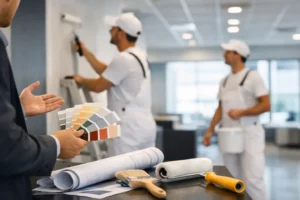
That is where workmanship matters. A dependable contractor will pay attention to the details that affect durability, not just speed. Proper prep, clean application, and the right product for the room all influence how long the finish stays in good shape. That hands-on approach is a big part of how 1UP Painting LLC approaches interior work.
If you are wondering whether your paint still has life left in it, look past the calendar and study the room itself. The real question is not just how old the paint is. It is whether the finish still looks clean, protects the surface, and fits the way you live in the space.