A house can look fine in the morning shade and worn out by noon. That is the reality of sun damaged house paint, especially in Arizona, where exterior surfaces take a beating for most of the year. What starts as faded color often turns into chalking, cracking, peeling, and exposed siding or stucco if it is ignored too long.
For homeowners, the question is not just how to improve curb appeal. It is also how to protect the surface underneath before small paint failure turns into a more expensive repair. The right response depends on what the sun has already done, what material your home is made of, and whether the last paint job was built to handle the climate.
What sun damaged house paint looks like
Sun damage does not always show up as dramatic peeling right away. In many cases, the first sign is fading. Darker colors usually show it sooner, especially on south-facing and west-facing walls that get the harshest exposure. A once-rich tan, blue, or gray can start to look washed out and uneven.
Chalking is another common warning sign. If you rub your hand across the wall and get a powdery residue, the paint film is breaking down. That means the binders in the paint are failing under UV exposure. Chalking may not look urgent at first, but it is a sign the coating is losing its ability to protect the surface.
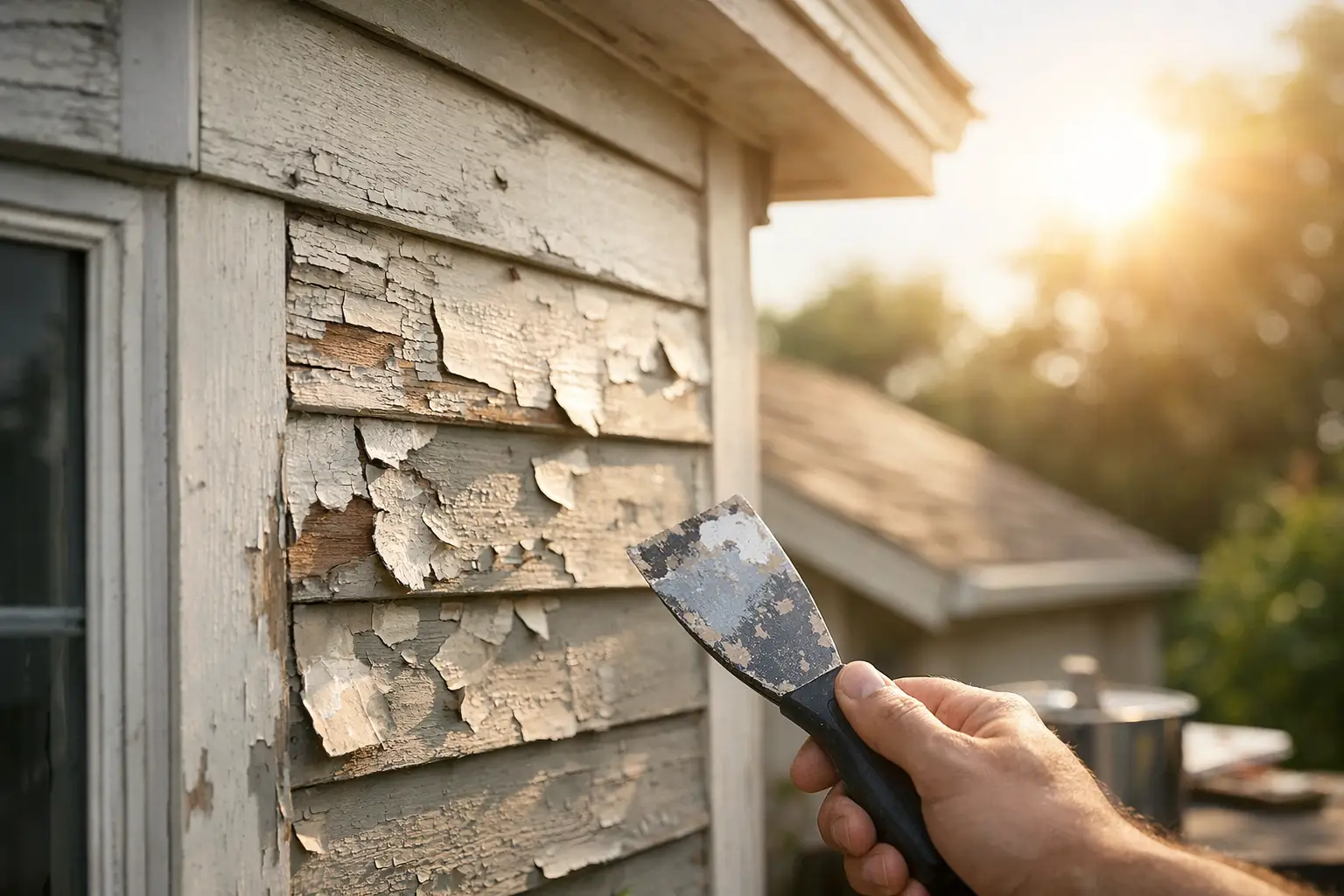
As damage progresses, you may see hairline cracks, bubbling, curling edges, or peeling around trim, fascia, and siding joints. On stucco homes, the paint can look thin and patchy before it fully fails. On wood surfaces, sun damage often combines with moisture stress, which increases the risk of splitting, rot, and deeper coating failure.
Why Arizona sun is so hard on exterior paint
Paint does not fail for one reason alone. In the Phoenix area, intense UV exposure is a major factor, but heat, dust, monsoon moisture, and poor prep all play a role.
UV rays break down the resins that hold paint together. Once that process starts, color fades and the surface weakens. High heat makes the problem worse by expanding building materials during the day and contracting them at night. Over time, that movement stresses the paint film.
Dust and airborne debris also matter more than many homeowners realize. If a house was painted over dirty or chalky surfaces without proper washing and preparation, adhesion is already compromised. Add a few hot summers, and the paint starts to let go much sooner than it should.
This is why two homes on the same street can age very differently. One may still look solid after several years, while the other looks tired and uneven. The difference usually comes down to product quality, surface prep, and whether the coating was appropriate for the material and sun exposure.
When fading is cosmetic and when it is a protection problem
Not every case of sun damaged house paint means immediate repainting is required, but some conditions should not wait.
If the paint is only slightly faded and still tightly bonded, you may have some time to plan the project. The appearance is affected, but the protective layer may still be doing its job. That said, if your goal is to maintain property value or keep the home looking sharp, waiting too long usually makes the repaint more involved.
If the paint is chalking heavily, cracking, or peeling, the issue moves beyond appearance. Once the coating loses adhesion, the surface underneath is more vulnerable. Wood trim can absorb moisture. Stucco can become more porous. Siding and fascia can weather faster. At that stage, repainting is not just about fresh color. It is about stopping further deterioration.
A good rule is simple. If the wall leaves powder on your hand, shows exposed substrate, or has visible peeling in multiple areas, it is time for a professional evaluation.
The surfaces that fail first
Exterior paint rarely wears evenly across the whole house. The most exposed elevations usually fail first, and horizontal or angled trim often shows damage sooner than protected vertical walls.
South-facing and west-facing walls
These sides take the strongest sun and usually show the earliest fading. If your home has bold or dark colors, this contrast becomes even more noticeable. Repainting only these walls can be tempting, but color matching an aged exterior is difficult. Spot work can stand out unless the overall condition is still very good.
Fascia, garage trim, and exposed wood
These areas tend to catch both heat and weather. If they were not primed correctly or if older paint was left unstable underneath, they often crack and peel before the main body of the house. Wood components need close attention because sun damage can quickly turn into material damage.
Stucco with thin or worn coatings
Stucco is durable, but the paint on it still takes direct UV exposure. Once the coating begins to thin out, the finish can look blotchy and tired. If there are cracks in the stucco itself, a repaint should address those first rather than simply covering them.
What a lasting repaint requires
A durable repaint is not just a color change. If the existing exterior has sun damage, preparation matters as much as the finish coat.
The first step is evaluating what can stay and what has to be removed. Loose and peeling paint needs to be scraped and sanded. Chalking surfaces need thorough cleaning. Damaged caulking should be replaced. Cracks, failed joints, and surface defects should be repaired before any new paint goes on.
Primer is not optional when bare areas are exposed or when the old surface is unstable in spots. The right primer helps lock down repaired sections and creates a more uniform base for the topcoat. Skipping it might save time in the short term, but it usually shortens the life of the job.
The paint itself also matters. In a hot, high-UV climate, exterior coatings need strong fade resistance and flexibility. Lower-grade products can look good at first and still wear out early. A quality paint system costs more up front, but it usually delivers better color retention and longer service life.
Can sun damaged areas just be touched up?
Sometimes, but not always.
If the damage is limited to a small, isolated area caused by a repair or a localized failure, touch-up work may make sense. But broad sun fading across one elevation or multiple sides of the home usually does not blend well. Fresh paint often looks noticeably different from older paint that has already weathered.
This is where honest guidance matters. A contractor should not promise an invisible touch-up if the result is likely to patch. In many cases, repainting a full wall, trim section, or the entire exterior is the cleaner and more cost-effective choice.
How homeowners can help paint last longer
Even the best exterior paint will not last forever in strong sun, but a few practical habits can help extend its life.
Washing the exterior occasionally helps remove dust and buildup that wear on the finish. Keeping sprinklers from hitting painted walls reduces unnecessary moisture stress. Watching for early caulk failure around windows, trim, and penetrations can prevent small gaps from turning into bigger issues. It also helps to address minor paint problems early instead of waiting until entire sections start peeling.
For many homeowners in Mesa, Chandler, Gilbert, and nearby communities, the smartest approach is routine inspection. You do not need to overreact to every faded spot, but you do want to catch the point where maintenance becomes protection.
Choosing the right time to repaint
Exterior painting in Arizona is partly about condition and partly about timing. If surfaces are actively failing, waiting through another long season of direct sun can increase prep needs and repair costs. On the other hand, repainting too early, when the existing coating is still performing well, may not be necessary.
A professional inspection can help determine where your home stands. The right contractor will look at adhesion, chalking, exposed materials, failed caulk lines, and whether the problem is limited to one section or spread across the property. That kind of assessment gives you a clearer answer than color alone.
At 1UP Painting LLC, the focus is not just making a house look fresh for a few months. It is delivering clean workmanship, proper preparation, and a finish built to hold up. That matters when the sun is part of the job every day.
If your exterior paint looks washed out, powdery, or uneven, trust what you are seeing. Sun damage rarely improves on its own, and early action usually gives you better options, better results, and a home that stays protected longer.