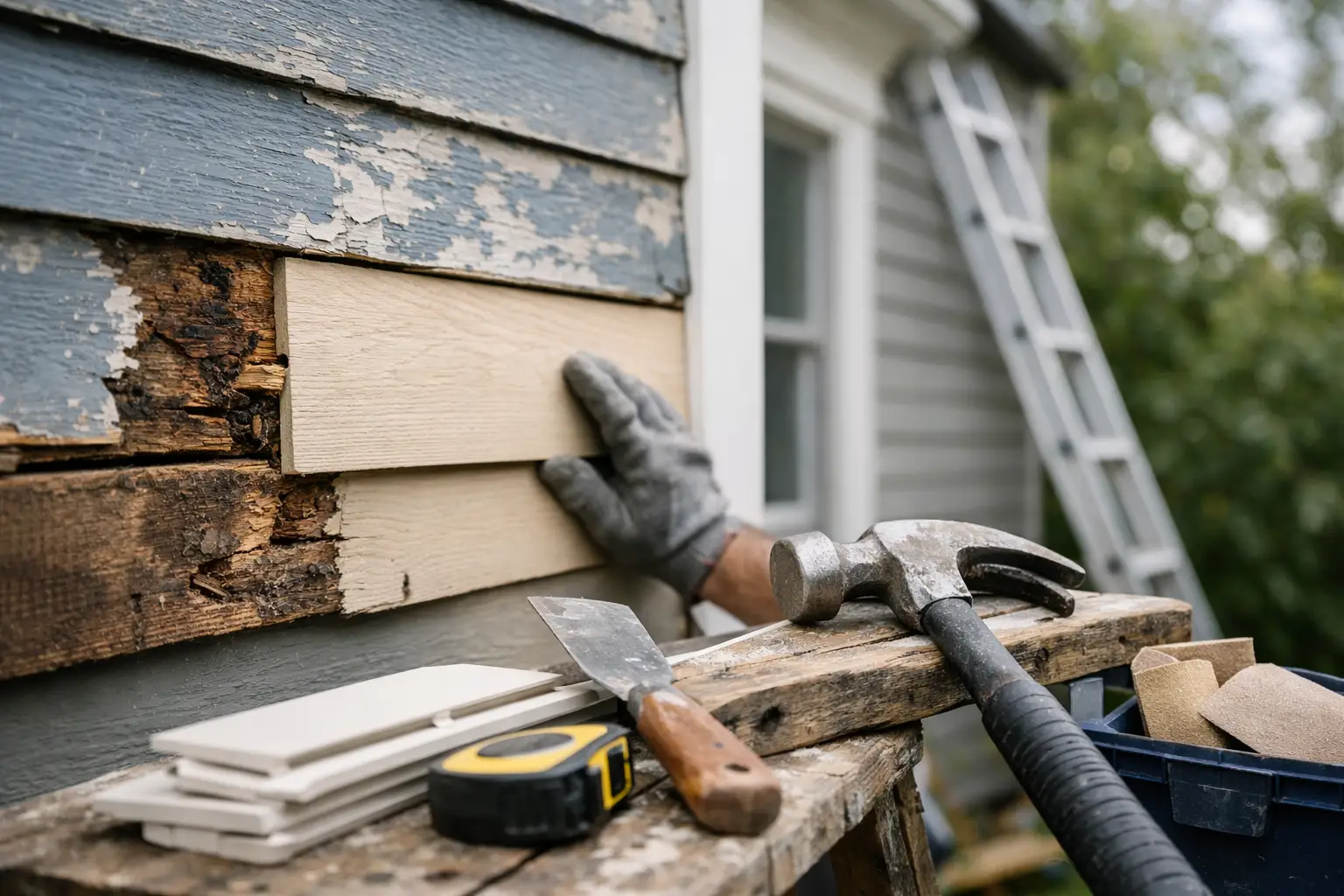
Fresh exterior paint can make a home look cared for again, but when siding is cracked, soft, loose, or swollen, paint alone will not solve the problem. Siding repair before painting is what separates a quick cosmetic update from a finish that actually holds up. If the surface underneath is failing, even the best paint job will struggle in Arizona sun, heat, wind, and monsoon moisture.
That is why prep work matters so much. Homeowners often focus on color and curb appeal first, which makes sense, but the real lifespan of an exterior coating starts with the condition of the siding. Good painting begins with honest inspection, sound repairs, and a surface that is clean, dry, and stable.
Why siding repair before painting matters
Paint is a protective coating, not a structural fix. It can shield siding from UV exposure and weather, but it cannot bond well to rotten wood, bridge active gaps, or hold loose boards in place for long. If damaged siding gets painted over, the finish may look acceptable for a short time, then start peeling, bubbling, cracking, or showing uneven texture much sooner than expected.
There is also a cost issue. Repainting an exterior is a meaningful investment, and skipping repairs usually shortens the life of that investment. In many cases, a few targeted repairs up front save homeowners from larger paint failure, water intrusion, or more extensive replacement later.
For homes in Mesa and across the greater Phoenix area, climate adds another layer. Long stretches of intense sun dry out materials, while seasonal storms can push water into weak joints, exposed edges, and old cracks. That combination tends to reveal every shortcut.
What contractors look for before painting siding
A proper exterior evaluation goes beyond obvious holes. Some damage is visible from the driveway, but some only shows up when a board is pressed, a seam is checked, or old caulk is tested. Before painting, the siding should be inspected for rot, warping, splitting, nail pops, open joints, insect damage, failed caulking, and areas where previous paint has lifted because the substrate underneath has moved or degraded.
Wood siding often shows the widest range of issues. A board may look mostly intact but still have soft spots at the bottom edge or around joints where water has been sitting. Hardboard and engineered wood products can swell at edges if moisture got in. Even fiber cement, which is more durable in many conditions, can still have cracked sections, failing joints, or installation-related gaps that need attention before coating.
This is also the stage where a contractor decides whether repair is enough or whether replacement makes more sense. That decision depends on how far the damage has spread, whether the board can still hold fasteners, and whether the surrounding sections are sound.
Repair or replace? It depends on the damage
Not every flaw means full replacement, and not every blemish should be patched. Small localized damage can often be repaired effectively, especially when the rest of the board is solid. Minor cracks, limited edge damage, isolated failed caulk lines, and small sections of surface deterioration may be good repair candidates.
Replacement is usually the better choice when siding is rotted through, badly warped, delaminated, or loose across a larger section. The same applies when repairs would only hide the issue instead of restoring a stable surface. A patch that moves differently from the surrounding siding, or one that traps moisture, can create more problems under the new paint.
A dependable contractor should be direct here. Homeowners do not need every exterior issue treated like an emergency, but they do need clear guidance on what affects durability and what is mostly cosmetic.
Common repairs done before exterior painting
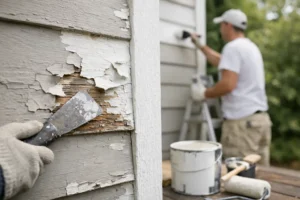
The exact scope depends on the material and age of the home, but most siding prep falls into a few practical categories. Damaged boards may be replaced. Small defects may be filled with exterior-grade patching compounds where appropriate. Loose sections can be resecured. Failed caulk around trim, joints, penetrations, and transitions is usually removed and replaced. Areas with peeling paint are scraped, sanded, and feathered so the finish does not telegraph harsh edges.
Priming is part of the repair process too, not just the painting process. Bare wood, patched areas, and replacement siding often need the right primer before finish coats go on. That step helps create more uniform adhesion and appearance, especially when old surfaces have weathered unevenly.
The quality of these repairs has a direct effect on how the final paint job looks. Smooth transitions, sealed joints, and properly prepared patches make the finish more consistent. Poor repairs, even if painted neatly, tend to stand out later.
Siding repair before painting and moisture control
One of the biggest reasons to repair first is moisture. Paint performs best on a dry, stable substrate. If water is getting behind the siding or soaking into exposed areas, that moisture can push the coating off from underneath. Bubbling, blistering, staining, and early peeling often trace back to moisture that was never addressed before painting started.
That does not mean every home has major water damage, but it does mean vulnerable spots deserve attention. Lower wall sections, window trim connections, horizontal joints, and areas near rooflines often take the most wear. If caulking has failed or boards have opened up, water finds those paths quickly during storms.
In Arizona, exterior surfaces can also cycle between very dry and suddenly wet conditions. Materials expand and contract. Caulk ages. Small cracks grow. A repair-first approach helps account for those stress points so the paint system has a fair chance to last.
The finish is only as good as the prep
Homeowners often notice color first, but they notice prep quality over time. A properly repaired and prepared exterior tends to age more evenly. The sheen stays more consistent, seams stay tighter, and fewer problem spots appear after the first hot season or storm cycle.
When prep is rushed, the signs usually show up early. You may see patched areas flashing through, rough scrape marks under the paint, caulk lines pulling apart, or replacement boards that were not properly primed. These issues are frustrating because they are often preventable.
That is why experienced crews spend real time on the surface before the first finish coat goes on. It is not the flashy part of the job, but it is the part that protects the result.
What homeowners should ask before the project starts
If you are getting estimates, ask how siding damage will be evaluated and documented. Ask whether repairs are included, limited, or billed separately. It also helps to ask what materials will be used for patching, caulking, and priming, because those products affect durability just as much as the topcoat does.
You should also ask where the contractor draws the line between repair and replacement. A trustworthy answer will not sound one-size-fits-all. Some projects need only spot repairs. Others need a few boards changed out to avoid future failure. Honest recommendations are part of professional prep.
For homeowners who plan to stay in the home, better repair work usually pays off in longer paint life and fewer maintenance issues. For owners preparing to sell, it can improve both appearance and buyer confidence. Either way, the goal is the same: a sound exterior, not a temporary cover-up.
Choosing a contractor who treats prep seriously
Exterior painting is easy to underestimate because the final result looks simple when it is done well. Behind that result is inspection, repair judgment, product knowledge, and careful workmanship. A contractor who values clean workmanship will explain what needs attention, complete repairs properly, and paint over a surface that is ready for it.
That approach is a big part of how 1UP Painting LLC handles exterior work. The objective is not just fresh color. It is a finish you can trust to look right and last.
A good paint job should make your home look better the day it is finished, but good siding repair should make that result hold up long after the ladders are gone. If your exterior is due for paint, start by asking a simple question: is the siding truly ready for it?