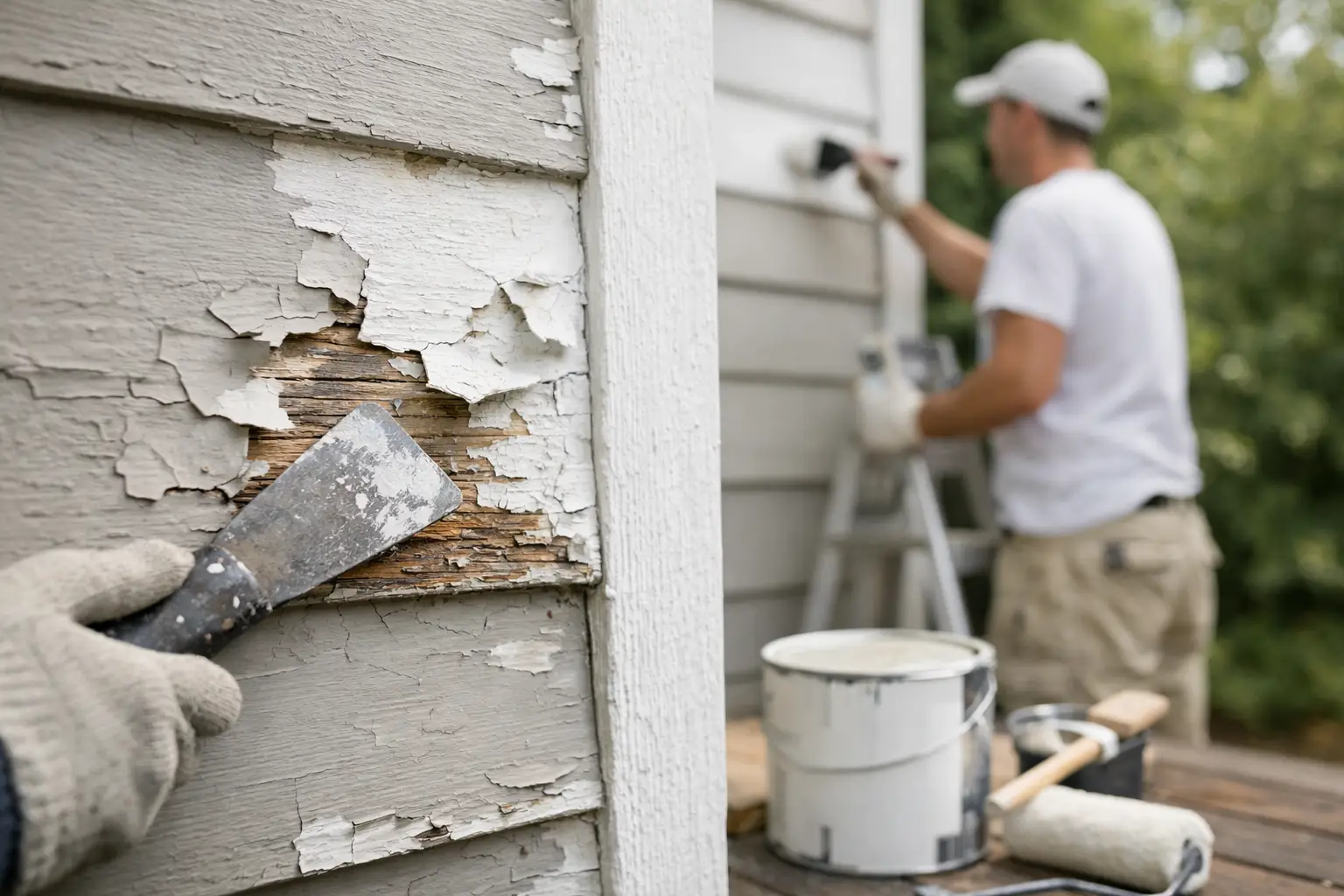
Peeling paint on the outside of a home is rarely just a cosmetic issue. Once the coating starts lifting, the surface underneath is more exposed to sun, wind, moisture, and ongoing wear. That is why peeling exterior paint repair needs more than a quick scrape and touch-up. If the cause is not addressed first, the new paint usually fails in the same spot.
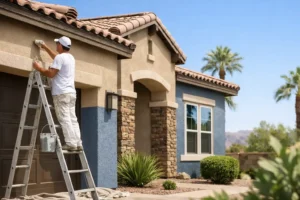
In Arizona, that problem can move faster than many homeowners expect. Strong UV exposure, heat cycling, dusty conditions, and occasional moisture intrusion all put stress on exterior coatings. A house may look fine from the street, but closer inspection often shows cracking, bubbling, chalking, and edges of paint that are no longer bonded well. Repairing it correctly protects the siding or trim underneath and helps the next paint job last longer.
What causes exterior paint to peel?
Paint peels when it loses adhesion. Sometimes that happens because the previous paint job was done without enough surface preparation. Other times, the paint itself is not the main problem. The surface may be holding moisture, the wrong coating may have been used, or the substrate may be breaking down under the paint film.
On wood trim and siding, moisture is a common trigger. Water can get behind paint through failed caulking, unsealed joints, roof runoff, or cracks in the material. When that trapped moisture tries to escape, it pushes the paint loose. On stucco, peeling may be tied to surface dust, poor curing, or incompatible coatings. On fascia and trim boards, harsh sun exposure can dry out coatings and make weak areas fail sooner.
Older layers can also create problems. If one coat was applied over a dirty, glossy, or unstable surface, every layer above it becomes vulnerable. In that case, fresh paint may look better for a short time, but it is still bonded to failure underneath. That is why a proper inspection matters before any repair begins.
Peeling exterior paint repair starts with diagnosis
A lasting repair begins by figuring out whether the issue is isolated or widespread. A few small areas of peeling around a door frame call for a different approach than broad paint failure across multiple elevations. The goal is to identify how far the adhesion problem goes and whether the substrate is still sound.
This is where many do-it-yourself repairs fall short. Homeowners often remove what is visibly loose, spot prime, and repaint. That can work for very minor touch-ups, but only when the surrounding paint is still firmly bonded and the underlying surface is dry and stable. If nearby edges are weak, the repair line continues to spread.
A professional assessment usually looks at more than the peeled spot itself. It considers sun exposure, water paths, caulk condition, chalking, wood condition, previous coating type, and whether the damaged area is tied to a larger prep or maintenance issue. In neighborhoods across Mesa and the greater Phoenix area, those details often make the difference between a repair that holds up and one that starts failing again after one summer.
How proper exterior paint repair is done
The first step is removing all loose and failing paint. That sounds simple, but it has to be done thoroughly. Leaving weak edges behind almost guarantees premature failure. Scraping, sanding, and feathering create a transition from bare material to sound existing paint so the finished surface looks smoother and the new coating can bond properly.
Once loose paint is removed, the substrate needs to be checked. If wood is soft, split, or starting to rot, painting over it will not solve the problem. It may need repair or replacement first. If stucco is cracked or powdery, patching and surface conditioning may be required before primer goes on.
Cleaning is another step that cannot be rushed. Dust, chalk, and debris interfere with adhesion. Depending on the surface, cleaning may involve washing, hand cleaning, or allowing adequate dry time after prep. In exterior work, dry time matters just as much as the coating itself. Paint applied to a damp surface often fails early, even when everything else looks right.
After prep, the right primer is used for the exposed material. Bare wood, repaired trim, patched stucco, and previously coated surfaces do not always call for the same product. Primer helps lock down the surface and gives the finish coat a better foundation. Then the finish paint is applied at the correct spread rate and under suitable weather conditions.
That process takes more time than a quick touch-up, but it is the reason durable results are possible.
When spot repairs make sense and when they do not
Not every peeling issue requires a full repaint. If the damage is limited to a few isolated areas and the rest of the paint system is still in solid condition, targeted repairs can be a practical option. This is often true on newer paint jobs where a small area failed because of localized moisture, impact damage, or missed prep.
But there is a trade-off. Spot repairs may stop the immediate problem, yet they can also reveal that the surrounding paint is nearing the end of its life. Once scraping starts, additional weak areas often show up. Color matching can also be difficult on sun-faded exteriors, especially when the repaired section sits on a highly visible wall.
A broader repaint may make more sense if peeling is happening in multiple places, if the paint is chalking heavily, or if the finish has lost overall integrity. In those cases, continued patching can become more expensive over time than addressing the exterior more completely.
Why Arizona homes need a different level of prep
Exterior paint in Arizona does not age the same way it does in milder climates. Constant sun exposure breaks coatings down faster, especially on west- and south-facing surfaces. Trim, fascia, garage doors, and exposed siding components often take the hardest hit. Even when moisture is not the main issue, intense heat can make marginal prep fail sooner.
That is why peeling exterior paint repair in this climate should focus on durability, not just appearance. The coating system needs to handle expansion, contraction, direct sunlight, and blowing dust. Surface prep, caulking, sealing, and product selection all matter more when weather is consistently hard on exterior finishes.
For homeowners planning to sell, this matters from a curb appeal standpoint as well. Peeling paint can make a property look neglected even when the structure itself is in good condition. Addressing it correctly improves appearance, but it also shows buyers that maintenance has not been deferred.
Signs it is time to bring in a professional
Some small repairs are manageable for a skilled homeowner, but there are cases where professional help is the better move. If paint is peeling around rooflines, second-story trim, fascia, stucco transitions, or damaged siding, the repair can quickly become more involved than it first appears. The same is true when moisture intrusion is suspected.
It is also worth calling a professional when the cause is unclear. Paint can peel because of heat, water, product failure, or poor prior prep, and each one calls for a different solution. Guessing often leads to repeated repairs.
A reliable painting contractor should explain what failed, what needs to be removed, what can stay, and how the repaired area will be primed and finished. That clarity matters. Homeowners should know whether they are paying for a cosmetic patch or a repair process built for longer-term performance.
At 1UP Painting LLC, that kind of prep-first approach is a big part of what homeowners value. Clean workmanship and careful surface preparation are not extras in exterior work. They are the foundation of a finish you can trust.
What homeowners should ask before approving the work
Before moving forward with exterior paint repairs, ask how the contractor plans to handle surface preparation. Ask whether loose paint will only be scraped where visible or whether surrounding adhesion will be tested. Ask what primer will be used, whether caulking or minor siding repair is included, and how the team will protect landscaping and keep the jobsite clean.
These questions are not about overcomplicating the job. They help separate a short-lived patch from a proper repair. Honest answers usually sound straightforward. A good contractor should be able to explain the plan clearly, set realistic expectations, and tell you if the damaged area points to a larger repaint need.
If your home has peeling paint, waiting usually gives the problem more time to spread. The right repair does not just improve how the exterior looks this month. It helps protect the surface underneath through the next stretch of heat, weather, and everyday exposure. That is work worth doing carefully the first time.