If you are standing in your kitchen wondering how much does cabinet painting cost, the short answer is that most projects land somewhere between a few thousand dollars and the mid-thousands, depending on size, condition, materials, and finish expectations. The longer answer matters more, because cabinet painting is one of those jobs where the final price is shaped by prep work, not just paint.
For homeowners, that difference is important. A low quote can look appealing until you realize it leaves out cleaning, sanding, repairs, proper priming, or reinstallation. A higher quote may include the steps that help the finish hold up against daily use, grease, moisture, and constant hand contact.
How much does cabinet painting cost on average?
In most homes, professionally painting kitchen cabinets costs about $3,000 to $8,000. Smaller cabinet sets may fall below that range, while larger kitchens, custom layouts, or projects with heavy prep needs can move higher. Bathroom vanities, laundry room cabinets, and built-ins usually cost less because there is less surface area and fewer doors and drawer fronts.
That range is broad for a reason. Painting 12 basic cabinet doors in a small kitchen is not the same as refinishing a large open-concept kitchen with island cabinetry, pantry walls, deep drawers, crown details, and worn surfaces that need repairs before any coating goes on.
The best way to think about cabinet painting cost is not just by total price, but by what the project includes. Two estimates can look similar on paper while delivering very different results.
What changes the cost of cabinet painting?
The biggest cost driver is the number of cabinet doors, drawer fronts, and exposed boxes. More pieces mean more labor for removal, labeling, cleaning, sanding, priming, spraying, drying, and reinstalling. Labor is the core of cabinet refinishing, because good results come from careful handling and surface preparation.
Cabinet condition also matters. If the surfaces are coated with years of cooking residue, have peeling finishes, chipped corners, swollen areas from moisture, or visible grain that needs extra smoothing, the prep time goes up. Cabinets in decent shape are faster to refinish than cabinets that need repairs before the first coat can even begin.
Material plays a role too. Solid wood, MDF, laminate, thermofoil, and previously painted cabinets all respond differently. Some surfaces accept coatings well with proper prep. Others need specialty primers or involve more risk. If a contractor is honest, they will not price every cabinet material the same way because they do not perform the same way.
Color changes can affect cost as well. Going from a dark stain to a clean white or light neutral often takes more effort to get even coverage and a consistent finish. Dark colors can also show flaws differently and may require extra attention to achieve a smooth, uniform appearance.
The application method matters too. Spray finishes generally produce the cleanest factory-style look on doors and drawer fronts, but that process requires setup, masking, dust control, drying space, and careful handling. Brush-and-roll methods may cost less in some cases, but they usually do not deliver the same smooth finish homeowners expect on cabinets.
Why prep work has such a big impact on price
Cabinet painting is won or lost in the prep stage. The cabinets need to be cleaned thoroughly to remove grease and residue, then sanded or deglossed so the primer can bond correctly. Gaps, dents, and minor damage may need repair. Hardware has to come off. Doors and drawers need to be labeled so everything goes back where it belongs.
After that comes priming, which is not optional on most cabinet jobs. A quality primer helps with adhesion, stain blocking, and finish consistency. Skipping or rushing this step is one of the main reasons cabinet finishes chip early or fail around handles and edges.
This is why extremely cheap cabinet painting estimates deserve a closer look. The lower price often comes from cutting corners on cleaning, sanding, masking, dry time, or coating quality. In the moment, those shortcuts are hard to see. Six months later, they usually are not.
Cost by project type
A small bathroom vanity might cost around $500 to $1,200 if the condition is good and the layout is simple. A standard kitchen with a modest number of doors and drawers may fall in the $3,000 to $5,500 range. Larger kitchens with islands, tall pantry cabinets, decorative trim, or multiple color areas often fall between $5,500 and $8,000 or more.
Built-ins, office cabinetry, and laundry room cabinets are usually priced by size, condition, and detail level. If the pieces have glass inserts, heavy grain, custom millwork, or damaged surfaces, the labor increases. The same goes for projects that require extensive masking because the cabinets stay in place while nearby walls, countertops, appliances, and floors must be protected.
How local market conditions affect pricing
Labor rates vary by region, and that affects how much does cabinet painting cost from one city to the next. In areas like Mesa and the greater Phoenix market, pricing can reflect demand, travel, material costs, and the level of finish homeowners expect. Arizona homes also present practical challenges such as heat, dust control, and scheduling around occupied living spaces.
That does not always mean prices will be higher than national averages, but it does mean local estimates should reflect real working conditions. Contractors who understand the area tend to price with those details in mind rather than using a generic number pulled from a national chart.
What should be included in a cabinet painting estimate?
A useful estimate should explain the scope clearly. That includes surface prep, removal of doors and drawers, cleaning, sanding or deglossing, primer, finish coats, masking and protection, hardware handling, reinstallation, and cleanup. If minor repairs are included, that should be stated. If they are extra, that should be stated too.
It should also identify the type of coating being used. Cabinet finishes are not the same as standard wall paint. They need better adhesion and durability, especially in kitchens where surfaces are touched constantly. If an estimate is vague about materials, ask questions.
Timeline matters as well. Cabinet painting is not usually a one-day job if it is being done correctly. Dry time, cure time, and staged work all affect scheduling. A contractor who explains that upfront is usually taking the project seriously.
Is cabinet painting worth the cost?
For many homeowners, yes. Replacing cabinets is far more expensive, and a good cabinet refinishing job can dramatically improve the look of a kitchen without changing the layout. If the cabinet boxes are solid and the doors are in paintable condition, painting is often a smart middle ground between living with an outdated space and paying for a full remodel.
That said, not every cabinet should be painted. Cabinets with structural damage, severe swelling, failing thermofoil, or poor-quality construction may not be the best candidates. A trustworthy contractor should tell you when painting makes sense and when replacement may be the better investment.
How to compare estimates without getting burned
The safest approach is to compare scope before comparing price. Ask what prep is included, what products are being used, how the finish will be applied, how doors and drawers will be handled, and what level of protection and cleanup you can expect.
You should also pay attention to communication. Cabinet work happens in one of the busiest rooms in the house, and the process can feel disruptive if it is poorly managed. Clear scheduling, realistic timelines, and clean workmanship matter just as much as the coating itself.
A company like 1UP Painting LLC understands that homeowners are not just buying color. They are paying for preparation, care, and a finish that can stand up to daily use.
How much does cabinet painting cost if you do it yourself?
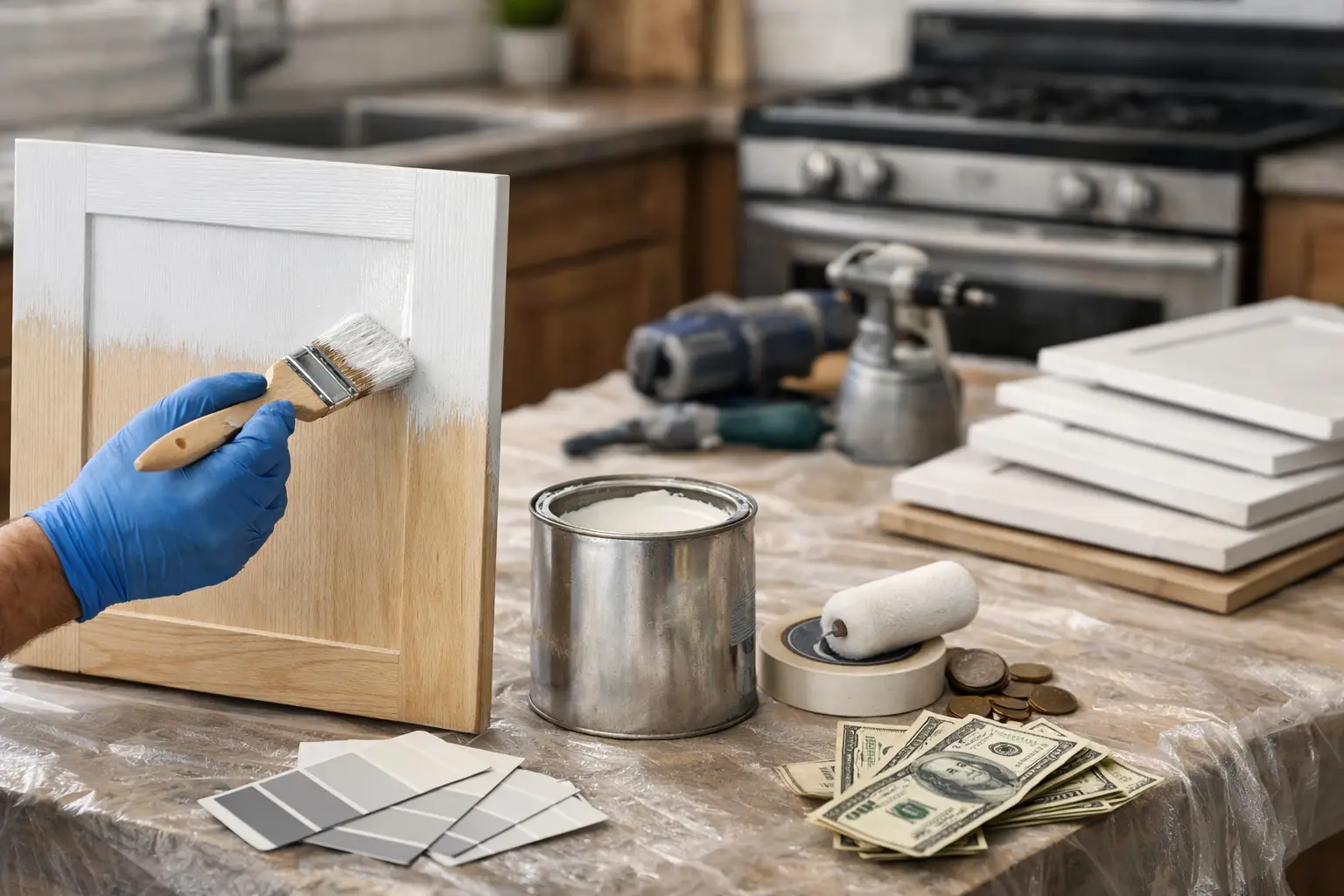
A DIY cabinet painting project may cost a few hundred dollars to over $1,000 in materials and tools, depending on the kitchen size and product quality. On paper, that sounds like major savings. In practice, DIY cabinets often cost more time, produce more stress, and carry a bigger risk of brush marks, drips, poor adhesion, or uneven sheen.
That does not mean DIY is always the wrong choice. If you have a small vanity, patience, and the right setup, it can work. But for a main kitchen, most homeowners find that the labor, disruption, and finish expectations make professional work the better value.
Cabinet painting costs what it costs because the job asks for more than color change. It asks for clean prep, careful process, and durable results. When an estimate reflects those things clearly, you are usually looking at a finish you can trust for years instead of a shortcut you will pay for twice.