If you live in Mesa, Phoenix, Chandler, Gilbert, or nearby communities, you already know Arizona is hard on exterior paint. The question is not just how often to repaint house exterior in Arizona, but how to tell whether your home still has real protection left or if it is only hanging on cosmetically.
That distinction matters. A house can look only a little faded from the street while the paint film is already breaking down under the sun. Once that happens, repainting stops being just an appearance upgrade and becomes part of protecting stucco, wood, trim, siding, and other exterior surfaces from deeper wear.
How often to repaint house exterior in Arizona?
For many Arizona homes, the realistic repainting range is about 5 to 10 years. Homes with high-quality prep work, premium exterior coatings, and lighter color palettes often stay in better shape longer. Homes with heavy sun exposure, darker colors, lower-grade paint, or skipped prep work can need repainting much sooner.
That is why there is no single calendar answer that fits every property. Two houses built in the same neighborhood can age very differently depending on orientation, shade, previous paint quality, and how well the surface was prepared before the last job.
In the greater Phoenix area, stucco homes are especially common, and stucco usually holds paint better than some wood surfaces. Even so, Arizona heat, UV exposure, dust, monsoon moisture, and temperature swings all take a toll over time. If your last exterior paint job was six or seven years ago, it is smart to start paying closer attention, even if the home does not look severely worn yet.
Why Arizona homes need repainting sooner than many other states
Arizona is not just hot. It is consistently intense in ways that shorten the life of exterior coatings.
The biggest factor is UV exposure. Strong sun breaks down binders in paint, causing fading, chalking, and loss of flexibility. Once the coating becomes brittle, cracking and peeling are more likely. South- and west-facing walls usually show this damage first because they take the brunt of the afternoon sun.
Heat also expands and stresses materials. Even when daytime and nighttime temperature swings seem normal, that movement adds up over the years. Paint has to stretch and hold. Lower-quality products or thin applications tend to fail faster under those conditions.
Then there is dust and monsoon season. Wind-driven dust can wear surfaces gradually, while seasonal moisture can expose weak spots in caulking, trim joints, and previously patched areas. Arizona is dry compared to many places, but that does not mean moisture is irrelevant. When rain reaches vulnerable areas, surface damage can accelerate quickly.
Average repaint timelines by exterior surface
Different materials age differently, so the repaint schedule depends in part on what your home is made of.
Stucco exteriors
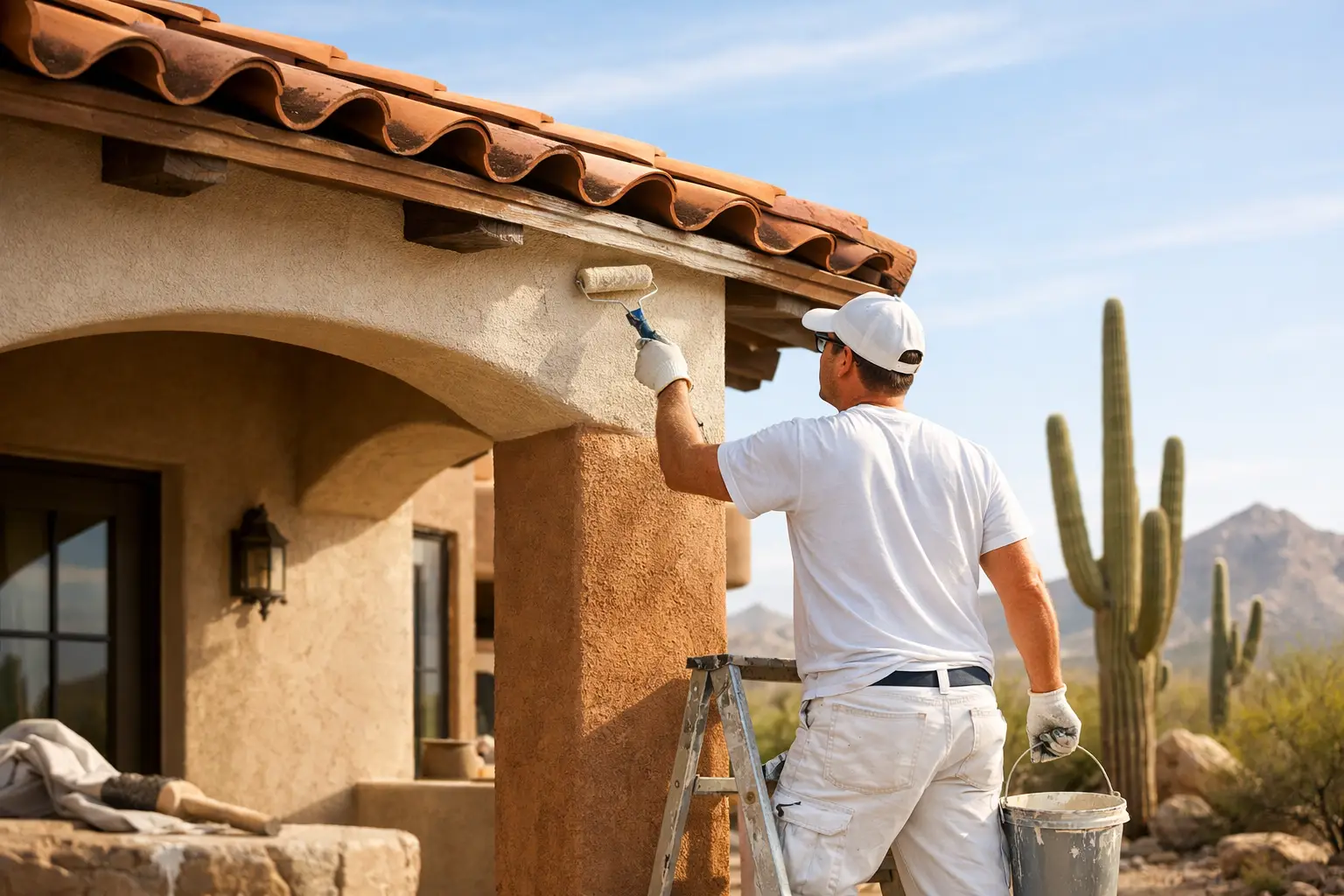
Painted stucco often lasts around 7 to 10 years in Arizona when the surface was properly cleaned, repaired, and coated with quality paint. Stucco is durable, but hairline cracks, chalking, and patch failure can shorten that window. If repairs were rushed the last time, a repaint may be needed closer to the 5- to 7-year range.
Wood trim and fascia
Wood usually needs more attention than stucco. Trim, fascia, and exposed wood details often show wear in about 4 to 7 years, sometimes sooner on the sunniest elevations. Paint protects wood from drying, cracking, and moisture intrusion, so waiting too long can lead to repair costs that go beyond repainting.
Siding and composite materials
Engineered wood and fiber cement products can perform well, but their repaint schedule still depends on exposure and previous workmanship. A good range is often 5 to 10 years. Caulking, joint condition, and edge sealing matter a lot here.
Doors, garage doors, and high-touch features
These surfaces tend to fade and wear faster because they are exposed and used more often. Front doors and garage doors may need repainting or refinishing before the rest of the exterior, especially if they are dark-colored and receive full sun.
Signs your Arizona home is ready for repainting
A calendar helps, but the surface condition matters more. The clearest signs are fading, chalking, cracking, peeling, and failed caulking.
Fading is usually the first thing homeowners notice. It may seem like a cosmetic issue, but it can signal that UV exposure is wearing down the protective layer. Darker browns, reds, blues, and other deep colors tend to show fading more dramatically in Arizona sun.
Chalking is another important warning sign. If you rub the surface and get a dusty residue on your hand, the paint film may be breaking down. At that stage, the finish is losing integrity, not just color.
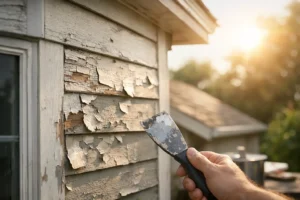
Cracking and peeling are stronger signs that the coating is no longer doing its job. Peeling often means adhesion has failed, and once that starts, spot repairs may only buy limited time. If trim boards, fascia, or window surrounds are involved, it is worth addressing the issue before the surface underneath starts to deteriorate.
Look at caulking too. When joints split or shrink, water can work its way into gaps during storms or irrigation overspray. Many homeowners focus on the paint itself and miss the fact that failed sealant is part of what makes an exterior feel old and vulnerable.
What makes one paint job last longer than another
The biggest difference is usually not the color. It is prep work.
A surface that is properly pressure washed or cleaned, scraped where needed, patched correctly, sanded in problem areas, and sealed with the right primer gives the finish coat a stable foundation. Skip those steps, and even premium paint can fail early.
Application quality matters too. Thin coverage, rushed spraying, poor masking, and missed backrolling can all reduce lifespan. That is one reason some homeowners feel like they just painted a few years ago and are already seeing wear again.
Product selection also plays a major role. In Arizona, exterior coatings need strong UV resistance and flexibility. Cheaper materials may look fine on day one, but they often do not hold up as long under desert exposure. Paying less up front can mean repainting sooner.
Color choice is another trade-off. Darker colors can look sharp and modern, but they typically absorb more heat and show fading sooner. Lighter colors generally hold up better in the Arizona sun, although every home has design goals to balance.
How to decide whether to repaint now or wait another year
If your exterior is only lightly faded with no chalking, cracking, or exposed substrate, you may have some time. A professional inspection can help you decide whether maintenance, touch-ups, or a full repaint makes the most sense.
If you are seeing chalking, widespread fading, cracking trim paint, or peeling around edges and joints, waiting usually increases the risk of more prep and repair later. Repainting before major failure often leads to better durability and a cleaner final result because the surface is still more stable.
This is especially true if you are planning to sell in the next few years. A fresh exterior improves curb appeal, but buyers also notice neglected trim, patchy fading, and surface wear. Repainting at the right time helps protect value, not just appearance.
A practical rule for homeowners in the Phoenix area
If your home was painted 5 or more years ago, inspect it closely every year. Pay extra attention to south- and west-facing walls, fascia boards, garage doors, and any repaired stucco areas. If it has been 7 to 10 years, many Arizona homes are due for repainting or at least a serious condition check.
For homeowners who want durable results, the best move is not waiting for severe peeling. It is repainting when the coating is beginning to decline, while proper prep can still restore the surface without avoidable damage underneath.
That is where workmanship matters. A well-planned exterior project with thorough prep, quality materials, and clean application will usually outlast a fast, low-detail job. Companies like 1UP Painting LLC focus on that difference because in Arizona, durability starts long before the first finish coat goes on.
If you are unsure whether your home needs paint now or later, trust what the surface is telling you. A house in Arizona does not stay protected by looks alone, and catching wear early is usually the better investment.