
A low painting quote can look like a win – right up until the crew skips prep, uses cheaper materials, or leaves you with uneven coverage and a short-lived finish. If you are trying to figure out how to compare painting quotes, the real job is not finding the lowest number. It is figuring out which proposal gives you the best value, the clearest scope, and the fewest surprises once work begins.
Painting prices can vary for honest reasons. One contractor may include thorough surface prep, premium products, and full cleanup. Another may price only the most basic labor and leave key steps vague. On paper, both quotes may describe the same room, house, or cabinet project. In practice, they can lead to very different results.
How to compare painting quotes without missing the details
Start by making sure each contractor is pricing the same project. This sounds obvious, but it is where many homeowners get tripped up. If one quote includes walls, ceilings, trim, doors, and minor drywall repair, while another covers walls only, the lower price is not really lower. It is a smaller job.
Read each estimate slowly and look for exact details about what will be painted, what will be repaired, and what is excluded. A good quote should spell out surfaces, approximate quantities, and the level of preparation. If the wording is broad, ask for clarification before you compare numbers.
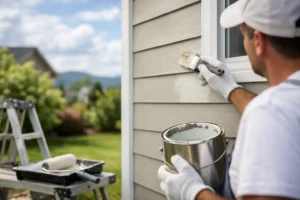
This matters even more for exterior painting in Arizona. Harsh sun, heat, dust, and weather exposure can make prep work the difference between a finish that lasts and one that starts failing early. When quotes vary a lot, prep is often one of the first places to look.
Compare the scope line by line
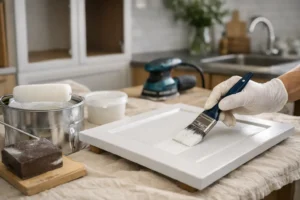
The best way to compare is line by line, not total by total. Look at whether each quote includes pressure washing, scraping, sanding, caulking, masking, priming, patching, and cleanup. For interior work, check whether nail holes, dents, stress cracks, and wall blemishes are part of the price. For cabinets, ask whether the quote includes degreasing, sanding, proper bonding primer, spray application, and curing time.
If one contractor writes “prep as needed” and another lists each prep step, the second quote is usually giving you a more dependable picture of the work. Vague language often leads to change orders or reduced quality later.
Look closely at paint products and finish details
Two bids can both say “paint included” and still be miles apart in quality. Ask for the brand, product line, sheen, and number of coats. Premium coatings cost more, but they generally cover better, hold color longer, and stand up better to washing, sunlight, and wear.
That does not mean the most expensive paint is always necessary. A laundry room, a rental turnover, and a sun-beaten stucco exterior do not all need the same product. What matters is whether the paint system fits the surface and the conditions.
A trustworthy quote should also explain whether primer is included where needed. Some surfaces can be painted with minimal prep. Others – raw patches, repaired drywall, stained areas, bare wood, chalky siding, or older cabinets – often need targeted priming for durable results.
Price matters, but value matters more
Homeowners are right to care about budget. Still, the cheapest quote can become the most expensive if the finish fails early or the project creates stress that should have been avoided. The goal is not to overpay. It is to understand what your money is buying.
A higher quote may reflect a small crew with tighter quality control, better scheduling, more detailed prep, stronger product choices, and cleaner workmanship. A lower quote may reflect efficiency and fair pricing. Or it may reflect shortcuts. You cannot tell from the total alone.
Ask yourself a simple question: if two estimates are far apart, what is the higher-priced contractor doing that the lower-priced contractor is not? Then ask the reverse: what might be missing from the cheaper quote?
Labor is not just labor
Painting is often treated like a commodity, but the finish on your walls, trim, siding, or cabinets depends heavily on labor quality. Surface prep, cut lines, masking, dust control, and cleanup all come down to the crew doing the work.
That is why it helps to ask who will actually be on site. Will the estimator also manage the project? Is the work handled by an experienced in-house crew or subcontracted out? How many people will be assigned? How long is the job expected to take?
A clear, realistic schedule is a good sign. A quote that promises a large project will be done unusually fast may sound appealing, but speed can come at the expense of preparation and detail.
What a painting quote should include
A professional estimate does not need to be complicated, but it should be specific. In most cases, you want to see the property address, scope of work, surfaces included, prep details, materials, number of coats, exclusions, schedule expectations, and payment terms. It should also note whether the contractor is licensed, bonded, and insured.
Warranty information matters too. A warranty should be clear about what is covered and what is not. Normal wear, moisture damage, structural movement, and product misuse are common exclusions. That is not a red flag by itself. What matters is whether the contractor stands behind workmanship in a clear and honest way.
If the estimate is missing several of these basics, that does not automatically mean the company does poor work. It does mean you should ask more questions before making a decision.
Questions worth asking before you sign
You do not need to interrogate a contractor, but a few direct questions can save you trouble later. Ask how they handle repairs discovered after work starts. Ask whether furniture moving, masking, and final cleanup are included. Ask who is responsible for protecting floors, landscaping, fixtures, and adjacent surfaces.
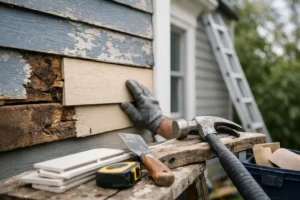
For exterior projects, ask how they handle peeling paint, hairline cracks, failed caulking, or damaged siding. For cabinet refinishing, ask about drying and cure times so you understand when the surfaces can be used normally. These details affect both price and your day-to-day experience during the project.
Red flags when comparing painting quotes
A very low bid is not the only warning sign. Another common issue is a quote that looks polished but says very little. If key parts of the work are not written down, you may be relying too much on verbal promises.
Be cautious if a contractor cannot clearly explain their prep process, avoids product details, or pushes you to decide immediately. The same goes for unclear deposit terms, no proof of insurance, or a quote that changes substantially without a clear reason.
Communication during the estimate stage is often a preview of communication during the job. If it is hard to get straight answers now, that usually does not improve once the project starts.
How to compare painting quotes for your specific project
The best quote depends on the type of work you need. Interior repainting often comes down to wall condition, room access, and finish expectations. Exterior projects are more sensitive to prep and product durability. Cabinet refinishing is detail-heavy and should never be judged by square-foot pricing alone.
For commercial spaces or occupied homes, scheduling may matter almost as much as price. A contractor who communicates clearly, phases the work properly, and keeps the site clean can save you a lot of disruption. That has real value, even if it is not the cheapest option on paper.
In Mesa and the surrounding East Valley, climate is also part of the equation. Exterior coatings need to hold up under intense UV exposure, and timelines may need to account for seasonal temperatures. A quote that reflects local conditions is usually more reliable than one that uses a generic approach.
At 1UP Painting LLC, we believe a quote should make the decision easier, not more confusing. Homeowners deserve straightforward pricing, clear expectations, and workmanship that holds up over time.
When you compare painting quotes carefully, you are not just hiring someone to apply paint. You are choosing the level of care your property will receive. The right proposal should leave you feeling informed, respected, and confident about what happens next.